Logo
Home
Archive
Log in
Get the next issue
Logo
  • Home
  • Posts
  • The Case Of The Architect’s Curse
4 NOVEMBER 2026

The Case of the Architect’s Curse

 
Quick: Name a famous architect. You probably said Frank Lloyd Wright, right? While many people can name at least a handful of well-known artists, architects are another story. They typically don’t get the acclaim of painters or sculptors, but Wright is a pretty big exception.
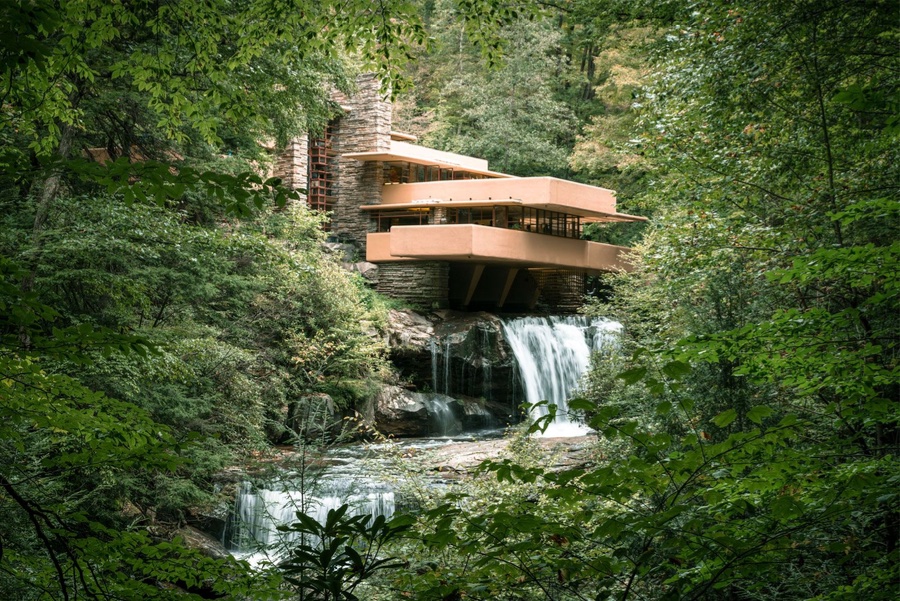
He became famous for his unique designs and never-before-seen buildings, starting with his Prairie homes and branching out to intricate and innovative structures like Fallingwater below. His brilliance as an architect is unquestioned, but so too is his reputation as a less-than-likeable person. It’s also possible that he left a lasting curse surrounding him and his homes for over a century.
Photograph of a flat-roofed house with peach-colored terraces built over a waterfall, seen through green forest leaves, with stone walls and rocks below
Fallingwater, 1936

The Love Cottage Burns – Three Times

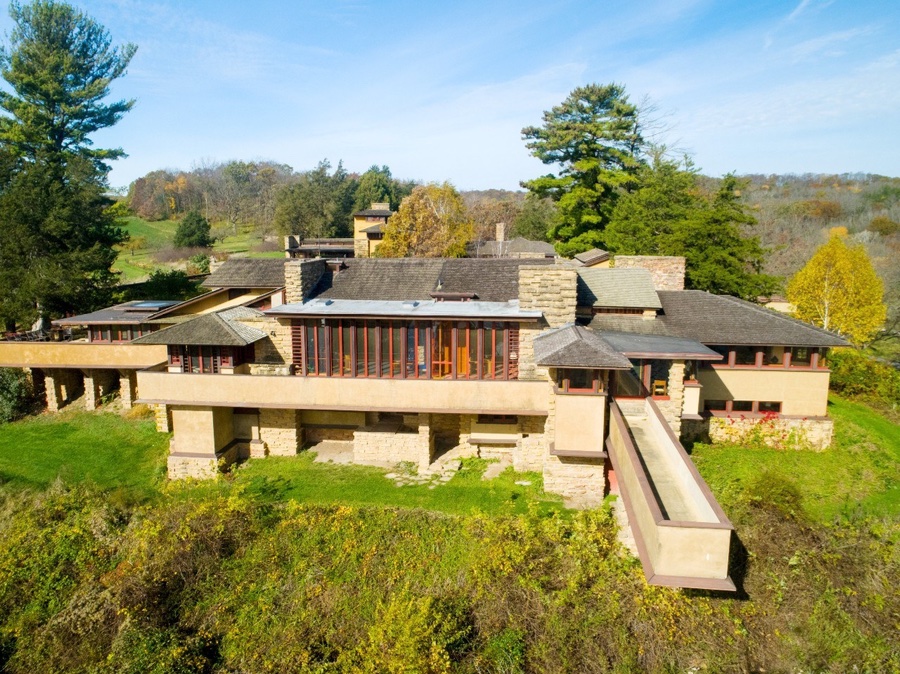
While Wright was a celebrated architect, nobody celebrated him as a husband or father. In 1903, he designed a home for Edwin Cheney and his wife Martha “Mamah” Borthwick Cheney. Shortly thereafter, Wright and Mamah began an affair and left their respective families. In 1911, Wright built a home near Spring Green, Wisconsin – which he called Taliesin – as a refuge for himself and his mistress. (The press called it the Love Cottage.)
In 1914, while Wright was in Chicago, a horrifying event occurred at the home. A servant named Julian Carlton set a fire that destroyed much of the building and used a hatchet to murder seven people, including Mamah and her two young children. To this day, no one knows why he did it.
While Wright eventually rebuilt, in 1925, there was another fire, this one caused by faulty wiring in his bedroom. While not as extensive as the first, it still resulted in a lot of damage. In 1952, yet another fire occurred at the estate. While Wright was burning leaves on the grounds, the wind suddenly shifted and a building that was used as a dorm for his architectural apprentices went up in flames. Firefighters were able to put the blaze out before it reached the main residence.
Aerial photograph of a long, low stone and tan stucco house with dark shingled roofs and a row of windows, on a green hillside under a blue sky
Taliesin
Three fires and a hatchet attack at one home. Do you buy the curse idea yet?
Tap one and the reply writes itself.
Not yet
It's getting spooky
Definitely cursed

Drownings and Yet Another Fire

In 1928, Wright married Olgivanna Lazovich. This was actually his third wife, as he had a brief marriage to a woman named Maude Miriam Noel, who was a morphine addict (but that’s a story for another day). While the two seemed to have had a mostly uneventful marriage, tragedy struck in 1946. Olgivanna’s daughter – Wright's stepdaughter – Svetlana Peters and her young son, while driving to Taliesin, drove off a bridge and died.
In 1954, Wright attended the wedding of his daughter Iovanna. At one point, she got too close to a lit candle and her bridal veil went up in flames. It was after this that he was heard to say “All my life I have been plagued by fire.”
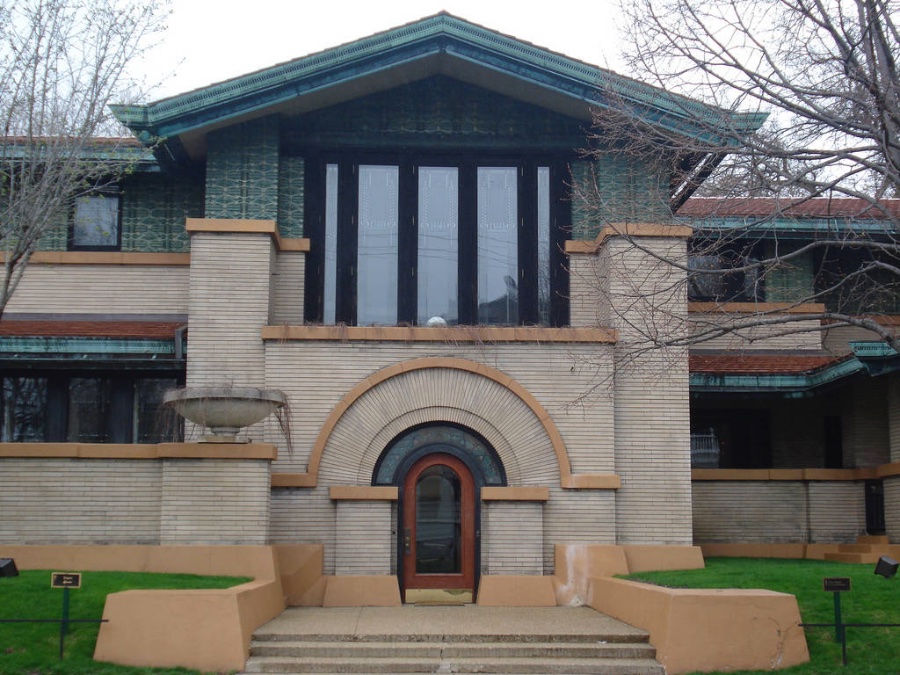
Photograph of a pale brick house front with a rounded arch doorway, a tall window with a green copper roof above, and bare trees beside it
Dana-Thomas House
A bridal veil caught fire at his daughter's wedding. Coincidence, or something more?
Tap one and the reply writes itself.
Pure coincidence
Hard to say
Something more

Insanity, Suicide, and, Yes, Another Fire

Even people outside of Wright’s social circle seemed to be affected by the negative aura around the architect. In 1902, Susan Lawrence Dean hired him to build her a home in Springfield, Illinois, eventually draining her family fortune to fund the project. When she ran out of money, she had to move into a cabin behind the house. Dean spent the last years of her life hospitalized for insanity.
In 1940, Wright built a home for Rose Pauson and her sister in Phoenix. However, just two years later, while guests were visiting, draperies blew into the open fireplace, and the home burned down. The only thing that remained for 30 years was the chimney, which became a popular spot for local youth to hang out.
In 1959, Seth Peterson – who tried but failed to qualify as one of Frank Lloyd Wright's apprentices years earlier – asked Wright to design a cottage for him. While he accepted the job (apparently Peterson sent him a retainer check for $1,000 and the architect, who was almost always in need of money, quickly cashed it), Wright died only shortly after work began. When Peterson ran out of money for the project in 1960, he hanged himself. He was just 23.
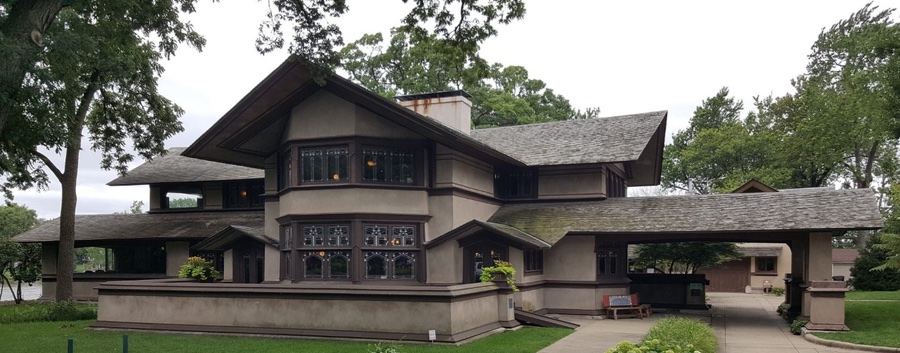
Photograph of a low brown and gray stucco house with wide overhanging shingled roofs, small patterned windows and a covered driveway, surrounded by green trees
B. Harley Bradley House

A Kidnapping and Another Suicide

Perhaps the strangest incident involving a Wright house occurred in 1987. A year earlier, wealthy businessman Stephen Small bought the B. Harley Bradley House in Kankakee, Illinois, which at that point was nearly 90 years old and in disrepair. Small’s goal was to restore it to its former glory.
Very early one morning, Small got a call at his home from what he thought was a Kankakee police officer telling him that someone had broken into the Bradley House. He quickly drove there, only to discover that it was actually a kidnapping plot. The kidnappers contacted Small’s wife and demanded $1 million. To keep Small hidden, they put him in a plywood box that they then buried under several feet of sand. While they had put a long plastic tube inside so Small could breathe, it didn’t work, and he suffocated. The kidnappers were caught and sentenced to life in prison.
Around the same time Wright designed and built the B. Harley Bradley House, he worked on the Ward W. Willits House in Highland Park, Illinois. It’s this home that is often singled out as his true masterwork of the Prairie style. In 2013, a woman named Sylvia Robinson died there in an apparent suicide.
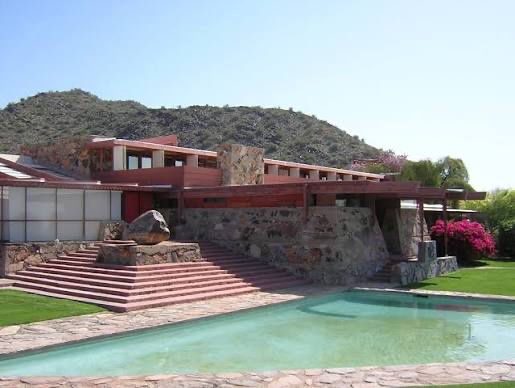
Taliesin West - Wikipedia
Taliesin West

The Curse Continues?

As Wright got older, he was eager to escape the harsh Midwest winters. In 1937, he decided to build a home in Scottsdale, Arizona. Despite the horrors that happened at Taliesin in Wisconsin, he named this winter retreat Taliesin West. In addition to being the headquarters of the Frank Lloyd Wright Foundation, the home has since become a historic site open to the public.
In September of this year, a group from a university in Brazil was touring the property. Among them was a man named Rogério Renato Mateucci. While walking the grounds, strong winds blew a piece of plexiglass off a roof. Mateucci was struck in the head and died instantly.
So, what do you think? Just a lot of bizarre coincidences or is it possible that Wright’s ghost is still out there haunting his houses?
Which of his houses stayed with you?
Tap the closest one, or hit reply and tell us in your own words. We read every note.
The house on the falls
The hilltop Taliesin
The arched doorway
The Bradley House
Art Snob
How was this issue?
One tap is all it takes.
Bad
Pretty good
Too snobby
Get the next issue
Got a friend who owns a print of dogs playing poker and is not ashamed of it? Forward this issue to them.

Keep Reading

Read More

Home

Archive

Terms of Use

Privacy Policy

2026 Art Snob. All rights reserved.