Logo
Home
Archive
Log in
Get the next issue
Logo
  • Home
  • Posts
  • Was Edward Hopper A Plagiarist?
30 OCTOBER 2026

Was Edward Hopper a Plagiarist?

 
These days, thanks in large part to an infinite amount of information online and AI “helpers,” it is not uncommon for kids to turn in work at school that’s not exactly their own. Pity the teachers who have to read an endless number of book reports on Bridge to Terabithia that all sound suspiciously the same.
Well, it turns out that even long before anybody knew anything about computers, kids were pulling similar stunts. A biography of Edward Hopper reveals that several paintings he created in his youth weren’t actually originals as was once thought, which has some people viewing the artist a little differently.
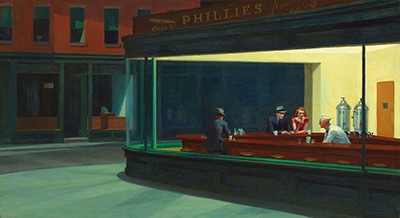
Painting of a brightly lit corner diner at night seen from the street, with three customers and a server inside, and dark empty buildings around it
Nighthawks, 1942
Source: thehistoryofart.org
Edward Hopper made a name for himself with his moody paintings depicting realistic snippets of life, like Nighthawks above. Whether a cityscape or rural farmhouse, his use of light and shadow and solitary figures often made his work mysterious and haunting.
But before he became a successful artist, Hopper was just a kid trying to find his way. In 1895, when he was just 13 years old, he created a makeshift studio in the attic of his family’s home in Nyack, NY. While he had previously dabbled in watercolors, now he turned to oils, and over the next several years produced landscapes that showed his burgeoning talent. The only problem? They were basically copies of other works.
Hopper's first oils were basically copies. Does that make you see the young artist differently?
Tap one and the reply writes itself.
Yes, a little
Not at all
It makes me like him more
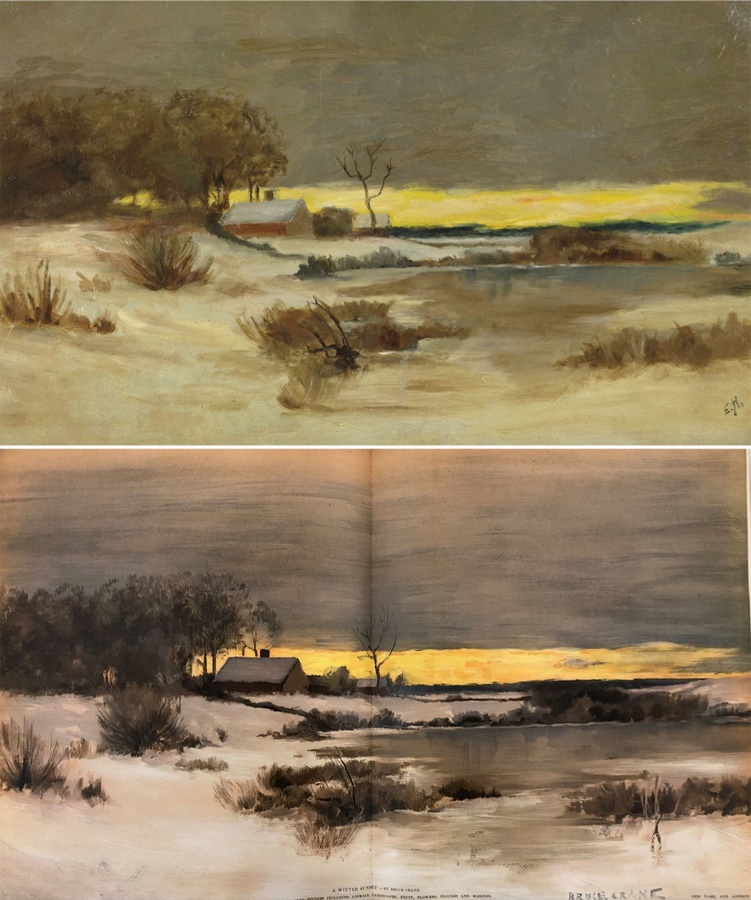
Painting of a snowy landscape with a small house and bare tree near a frozen pond under a gray sky with a yellow streak of sunset
Edward Hopper's Old Ice Pond at Nyack (around 1898-1900)
Source: theartnewspaper.com
Before enrolling in art school in 1900, Hopper painted at least six landscapes in his attic studio. Among them was Old Ice Pond at Nyack, “thought to be one of his very few undoubted depictions in oil of the Nyack of his youth and one of his first signed paintings,” wrote biographer Louis Shadwick. It shows a somewhat bleak snowy landscape with a yellowy streak of sunset in the background.
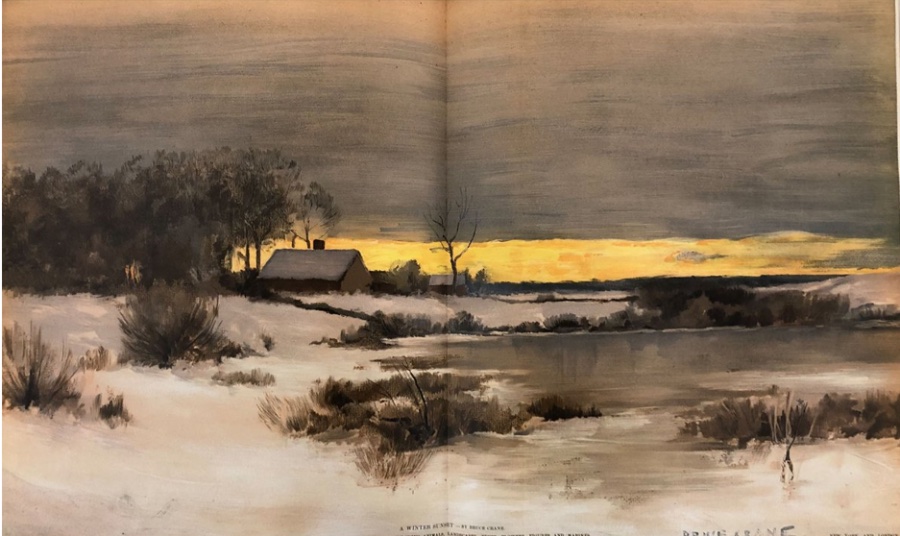
The title is a reference to a pond that was near the Hopper home, and there are postcards and photos that show the real thing. And what these reveal is that his painting doesn’t resemble it or any of the terrain in Nyack. But instead, it bears a striking resemblance to the painting below entitled Winter Sunset by Bruce Crane, which depicts a pond in Long Island or Connecticut, and was printed in Art Interchange magazine in 1890.
Painting of a snowy landscape with a small house and bare tree beside a frozen pond, under a gray sky with a yellow sunset band, printed across a magazine spread
Winter Sunset by Bruce Crane, which was published in the December 1890 issue of Art Interchange magazine
Source: theartnewspaper.com
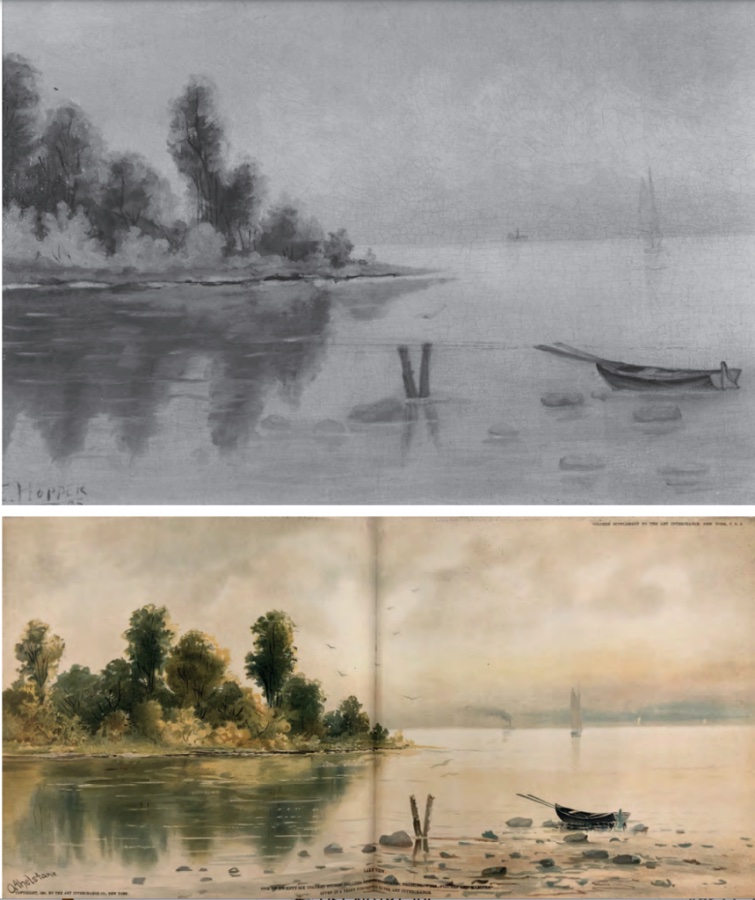
Hopper also painted a work called Rowboat in Rocky Cove, which shows a little boat sitting in a small inlet with a stretch of land covered in dense foliage in the background and shadowy ships in the distance. This too looks nearly identical to a watercolor painting called Lake View by an unknown artist, also published in the Art Interchange, thought to be of a lake in Athelstane, Wisconsin. 
Overall, Hopper produced four paintings that were very nearly duplicates of other works. While the origins of two others remain unknown, Shadwick wrote that they “must be regarded with similar suspicion.”
Four paintings were near duplicates of magazine prints. Does that change how you see them?
Tap one and the reply writes itself.
Yes, completely
A little
I see the art first
Two paintings of a calm misty inlet with a rowboat near stones and posts, trees on the left, and a sailboat in the distance, one gray and one colorful
Edward Hopper, Rowboat in Rocky Cove, 1895 Unknown artist, Lake View (c. 1880s)
While it may seem that the young Hopper might have been trying to pull a fast one (perhaps to win a middle-school art show), the truth is much less salacious. Although all but one of those early paintings are signed, it is possible that they never even left his attic, as that’s where Reverend Arthayer R. Sanborn found them after the artist had died. It was Sanborn who named several of the works, which cemented their connection to Hopper’s hometown.
Instead, it appears that Hopper used the color plates in Art Interchange as teaching tools. In fact, the magazine encouraged people to copy the works, and the plates were accompanied by instructions on how to do it. The ones for Lake View even said that the painting was “a very simple subject and well adapted to beginners.”
So, should this change our perception of Hopper? Juliana Roth, Chief Storyteller at the Edward Hopper House Museum & Study Center doesn’t think so. “This is a fascinating revelation, but one that does not reduce the importance of these paintings in the conversation of Hopper’s artistic journey,” she wrote. She suggests “viewing these paintings as artifacts from the development of a young life. A young artist’s life.”
She also added that “the myth of artistic genius is just that, a myth. No artist develops in a bubble, without influence, resource, or access…We believe it is essential to demystify the untouchable, unattainable notion of a master artist, and hope instead to inspire the belief in everyone to begin where they are, with whatever tools they have.”
Which of these paintings stayed with you?
Tap the closest one, or hit reply and tell us in your own words. We read every note.
The night diner
The snowy pond
The magazine sunset
The two rowboats
Art Snob
How was this issue?
One tap is all it takes.
Bad
Pretty good
Too snobby
Get the next issue
Got a friend who owns a print of dogs playing poker and is not ashamed of it? Forward this issue to them.

Keep Reading

Read More

Home

Archive

Terms of Use

Privacy Policy

2026 Art Snob. All rights reserved.